
I talk to Ocean County homeowners every week who've already decided what their home is worth before we've had a single conversation. They pulled up Zillow, saw a number they liked, and that number became the anchor for everything.
I get it. It's human nature to gravitate toward the most available information.
But here's the thing: that number and what a buyer will actually put in writing are often two very different things. And the gap between them is where sellers either leave money on the table or watch their listing sit longer than it needed to.
Zillow's latest data puts Ocean County's typical home value at $549,766 as of October 31, 2026, up 4.6% year over year. That's genuinely good news for homeowners. At the same time, nearly half of all closings in the county recently finished below asking price. Both of those things are true right now, in the same market, at the same time.
Understanding why is the difference between pricing with confidence and pricing with hope.
Key Takeaways
Online estimates are starting points. Zillow's national median error rate for off-market homes is 7.20%, which on a $550,000 home is nearly $40,000 of potential variance.
Ocean County is not one market. A ranch in Toms River, an age-restricted condo in Manchester, and a lagoon home in Barnegat each attract completely different buyers.
Values rising and homes selling below asking aren't contradictory. Appreciation tracks change over time; sale-to-list ratios track how well sellers priced against actual buyer demand.
A CMA (comparative market analysis) is more useful than any algorithm because it accounts for your specific home, not a statistical average.
The asking price is a marketing decision, not a valuation. It reflects strategy, not guaranteed outcome.
Early buyer response is your most honest pricing signal. What happens in the first two weeks tells you more than any estimate ever could.
Net proceeds matter more than list price. Credits, contingencies, financing type, and closing timelines all affect what you actually walk away with.
What Does Your Ocean County Home's Value Mean?
Here's something that surprises a lot of sellers: "value" means different things depending on who's calculating it and why.
A few terms worth knowing:
Automated estimate (Zestimate): Generated by an algorithm using public records and recent sales data. It's a reasonable starting point, but it doesn't know your kitchen was just renovated or that your roof is 20 years old.
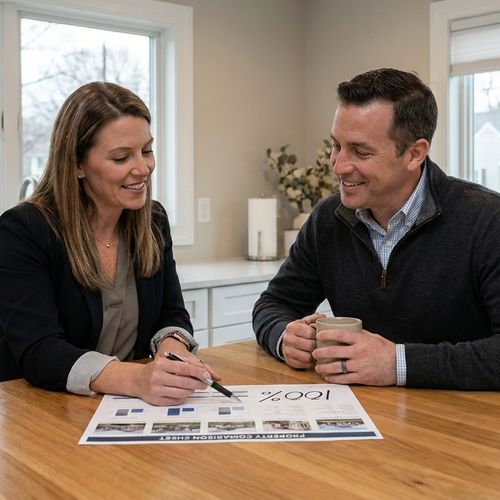
Comparative market analysis (CMA): An agent-prepared estimate using recently sold, pending, and active homes most similar to yours. This is what I use to help sellers price strategically, not optimistically.
Appraised value: A licensed appraiser's formal opinion, usually required by a lender. Based on comps and a physical inspection, but it's still someone's professional judgment, not a fixed truth.
Market value: What a motivated buyer pays a motivated seller when both have reasonable information and no unusual pressure.
List price: Your asking price. It's a strategy, not a valuation.
Net proceeds: What you actually take home after the mortgage payoff, commissions, taxes, closing costs, and any credits to the buyer.
Most sellers focus on list price. The number I'd encourage you to focus on is net proceeds. That's the one that actually changes your life.
How Do Ocean County Buyers Decide What to Pay?
Buyers aren't looking at your Zestimate. They're looking at every other home available in their price range and asking themselves: "Does this make sense compared to what else I can get?"
That comparison is your real competition.
A few things consistently shape what a buyer will offer:
Condition. Homes that feel well maintained hold price better than homes where deferred maintenance is obvious on the first walkthrough.
Layout. Buyers want space that fits how they actually live. A fourth bedroom no one will use isn't worth the same as a first-floor primary suite to the right buyer.
Competing inventory. If three similar homes are listed nearby, buyers have options and they know it.
Carrying costs. In Ocean County, that includes property taxes, HOA fees where applicable, and flood insurance in certain zones. These numbers factor into what a buyer can realistically afford to offer.
Financing. A cash buyer moves differently than someone with a jumbo loan. FHA buyers have different constraints entirely. The type of financing behind an offer affects the offer itself.
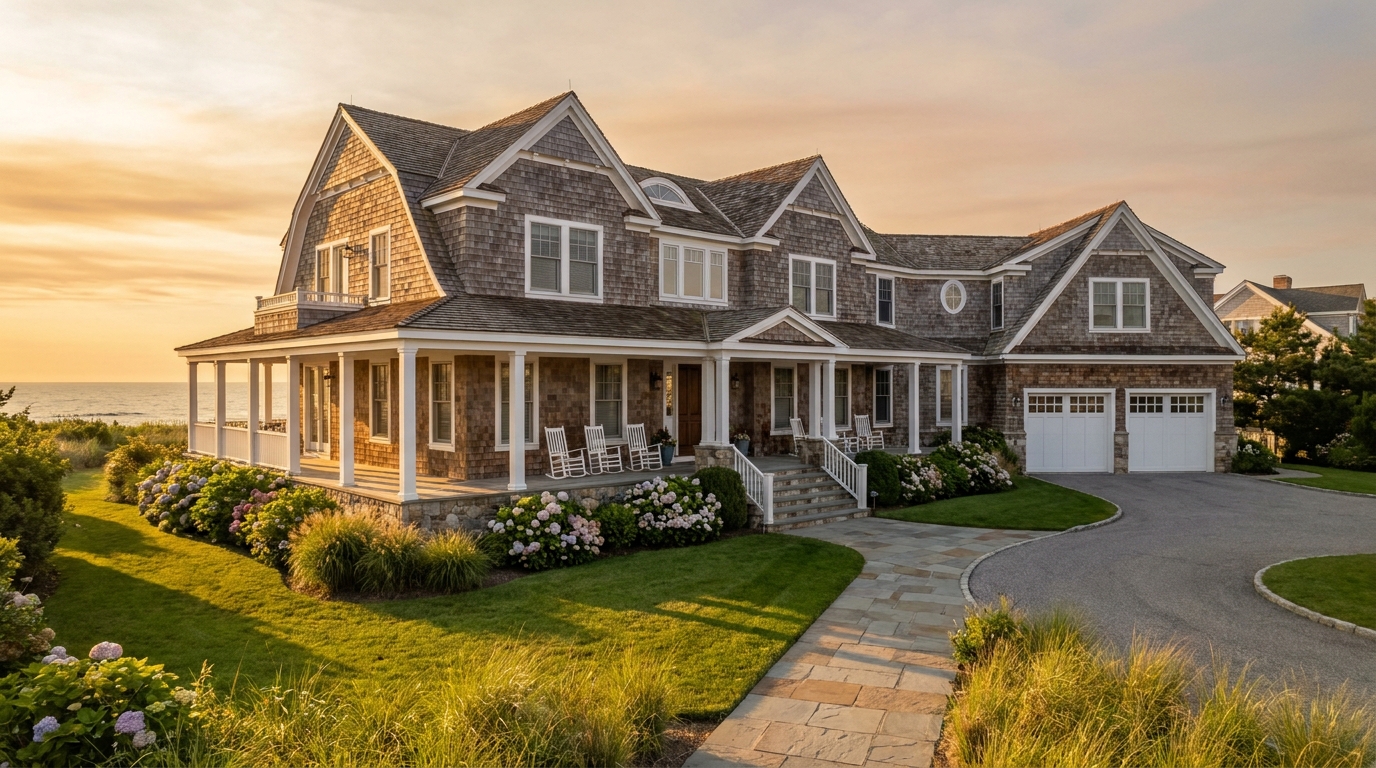
For waterfront and water-access homes, especially in lagoon communities around Toms River, Barnegat, or Stafford, buyers will also factor in bulkhead condition, boating access, and elevation. If you have a flood elevation certificate on file, that can actually support your price. If you don't know what your flood exposure looks like, it's worth finding out before a buyer's insurance quote becomes a negotiating point.
Why Do Rising Values and Below-Ask Sales Coexist?
This is the question I get most often, and honestly it's a fair one.
Appreciation measures how values shift over time across a large sample of homes. Sale-to-list ratio measures how individual sellers priced relative to what buyers were willing to offer on a specific day. Those are two completely different things.
A rising market doesn't mean every asking price is justified. It means that well-priced homes, in good condition, with the right presentation are holding or growing in value. Overpriced homes in that same market still sit.
Here's what Ocean County's October 2026 data looks like, broken down by property type:
Property Type | Median Closing Price | List Price Received |
|---|---|---|
Single-Family | $652,500 | 99.4% |
Townhouse/Condo | $506,500 | 98.2% |
Adult Community | $332,500 | 98.1% |
Source: NJ Realtors Market Data
A home selling at 98% of list price isn't a failure. It might reflect a well-priced home with a reasonable negotiation. The homes selling significantly below asking are usually the ones that were priced based on what the seller wanted rather than what the market supported.
How Can Sellers Estimate a Realistic Sale Price?
A good pricing conversation doesn't start with a number. It starts with the right questions. Here's how I work through it with sellers.
Step 1: Verify the Property Facts
Before anything else, check what the public records actually show. Square footage errors, missing permit records, and outdated room counts are more common than you'd think. Online data doesn't always reflect a finished basement or a bathroom addition. Those errors affect your estimate before the conversation even starts.
Step 2: Select the Closest Comparable Sales
Comps (comparable sales) are the foundation of any price opinion. The goal is to find homes that sold recently, in the same community or neighborhood, with a similar size, condition, and style.
In Ocean County, this requires real local knowledge. A three-bedroom in a standard Toms River neighborhood is not a comp for a similarly sized home in an age-restricted community in Manchester. The buyer pools, motivations, and price sensitivities are completely different.
Step 3: Compare Active and Pending Listings
Sold comps show what buyers paid. Active listings show what you're competing against right now. Pending sales are especially useful because they reflect offers accepted in current market conditions, even if the final prices aren't always public.
If three similar homes near yours are sitting with price reductions, that's information. If nothing comparable has been listed in months, that's information too.
Step 4: Adjust for Buyer-Relevant Differences
Not every adjustment is dollar for dollar. A renovated kitchen might attract more buyers without adding the full renovation cost to the sale price. A roof that needs replacement almost always becomes a negotiating point, whether you price it in upfront or not.
For waterfront properties, the adjustments get more specific: bulkhead condition, water depth, boating access, flood zone designation. These aren't things a Zestimate can account for, but they absolutely affect what a buyer will offer.
Step 5: Set a Price Range and Launch Plan
The goal isn't a single magic number. It's a defensible range with a clear strategy for how to enter the market, what to watch for in the first two weeks, and when to adjust if the response tells you something.
What Does Buyer Response Say About Your Price?
The first two weeks on market are the most valuable data you'll collect.
If your home is priced right for its condition and location, you'll see showings, real engagement, and offers. If the market goes quiet after a solid launch, that's the market giving you honest feedback.
A few patterns worth paying attention to:
High online saves, few showings: Buyers are curious but not compelled. Sometimes a photo issue, sometimes a pricing concern.
Showings but no offers: Buyers are seeing something in person that doesn't match the price.
Offers consistently below asking: The market is telling you where it sees the value.
None of this means you're in a bad position. It means you have useful information to work with. A pricing conversation at week two is far more productive than waiting until month two.
If you want an honest read on where your Ocean County home sits in today's market, including a property-specific range and a real look at what buyers are offering on comparable homes right now, I'm happy to have that conversation.
Frequently Asked Questions
Is My Property Tax Assessment the Same as My Sale Value?
No. New Jersey assessments are based on a statutory valuation date and are used for tax purposes, not sale pricing. Your assessed value may be meaningfully higher or lower than your actual market value depending on when the last reassessment took place.
Should I Get an Appraisal Before Listing My Home?
For most homes, a well-prepared CMA from an experienced local agent covers it. A pre-listing appraisal can be worth considering for unique properties, waterfront homes, or situations where there are very few recent comparable sales.
Why Did My Zestimate Change After My Home Was Listed?
Zillow's model updates when new listing information becomes available, so the estimate often shifts once your home hits the market. It's not an appraisal and it doesn't predict what a buyer will offer.
Can a Below-Asking Offer Still Be the Strongest Offer?
Yes, and often it is. An offer slightly below asking with no contingencies, solid financing, and a flexible closing can easily outperform a full-price offer loaded with credits, contingencies, and uncertainty. Net proceeds and confidence in closing both matter.
How Often Should I Review My Home's Market Value?
Once or twice a year is reasonable if you're not planning to sell soon. More importantly, revisit it after a major comparable sale in your neighborhood, after significant improvements, or any time your timeline changes.
Check out this article next